


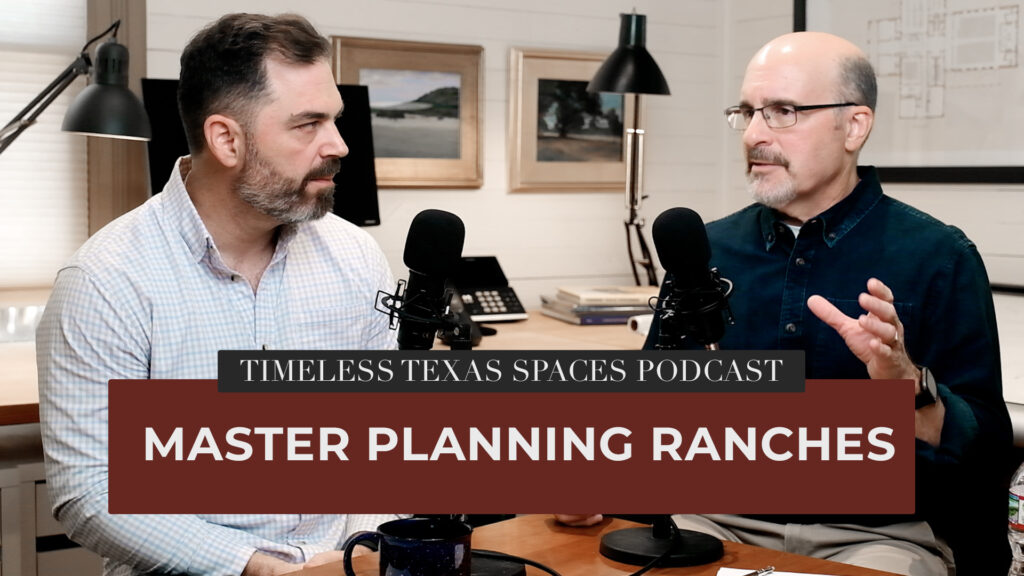
In the latest installment of our video series, the Dibello Architects team travels deep into the Texas countryside to explore how a large ranch property becomes more than acreage, but a living, enduring place. This episode isn’t just about roads, buildings, or fences; it explains how a master plan can honor the character of the land itself, balancing human use with ecological integrity and long-term beauty.
Listening to the Land
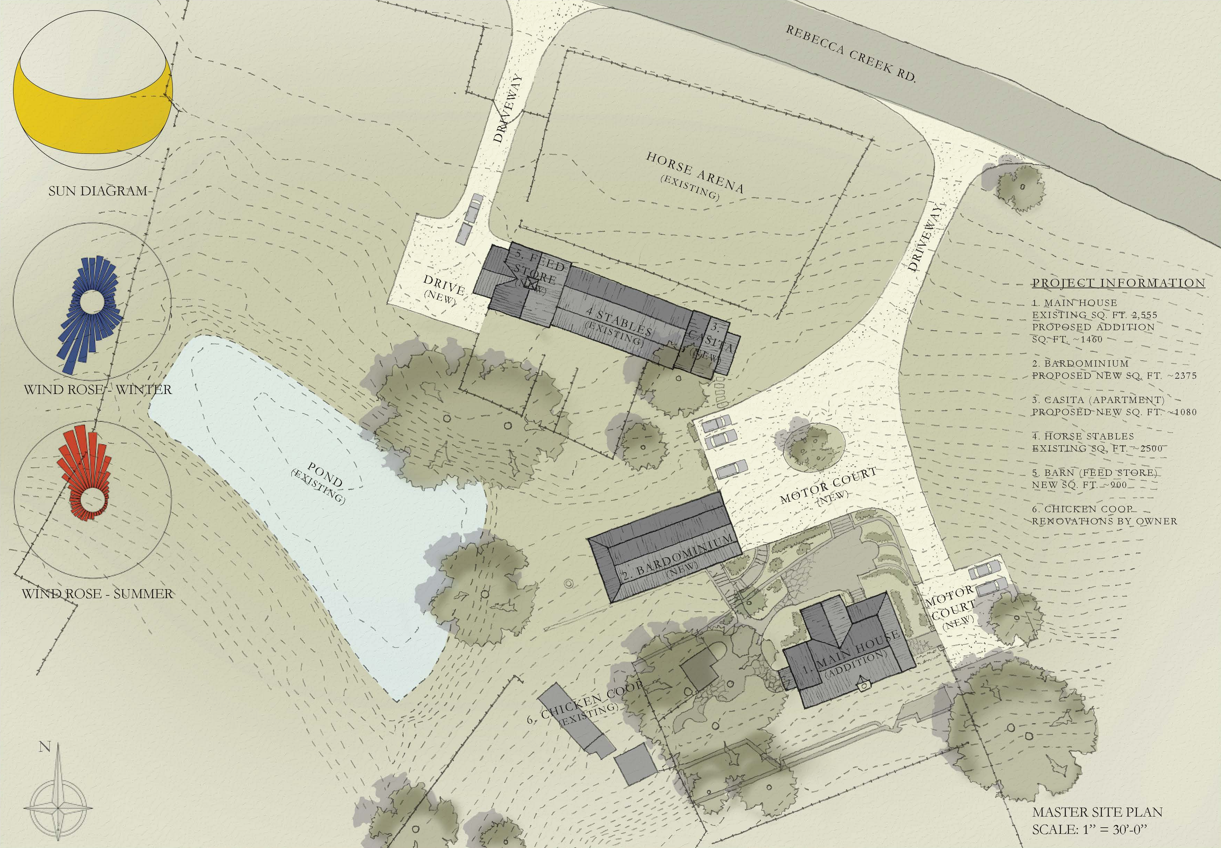
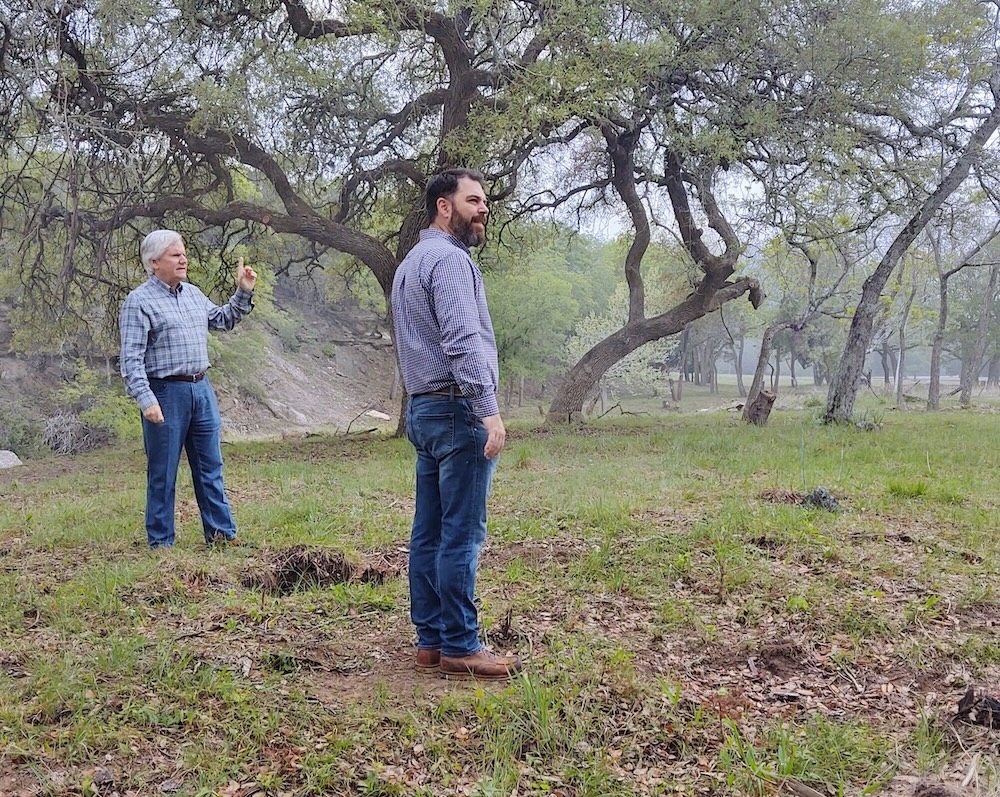
Before a single line is drawn, the team walks the property, reading slopes, creeks, soils, and prevailing winds. The master plan begins with observation – mapping drainage, tracking sun paths, and understanding how the land already works – so future buildings, roads, and trails feel placed, not imposed.
Views, Circulation, and Experience
Movement across the ranch is treated as an experience. Entry roads reveal long views, trails lead to quiet overlooks, and homes are oriented to capture breezes and sunsets. Every path and pause is intentional, shaping how the land is encountered day to day.
Water as Design Partner
Texas ranches live and breathe with water. Seasonal rains, hidden springs, and long dry spells shape every decision. The episode shows how hydrology guides road alignments, building placement, and drainage strategies, turning stormwater into a working part of the landscape rather than a problem to solve.
Building Placement with Purpose
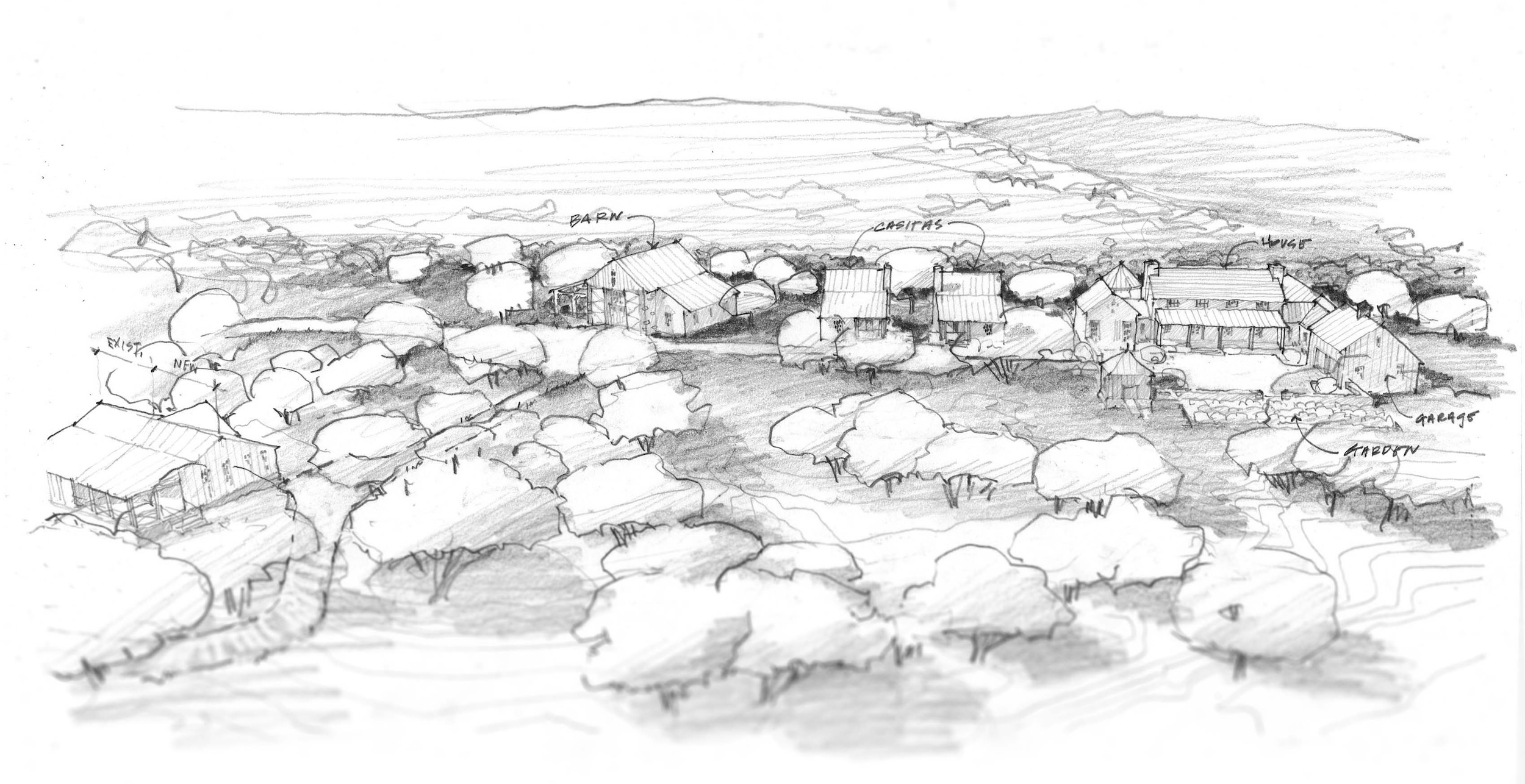
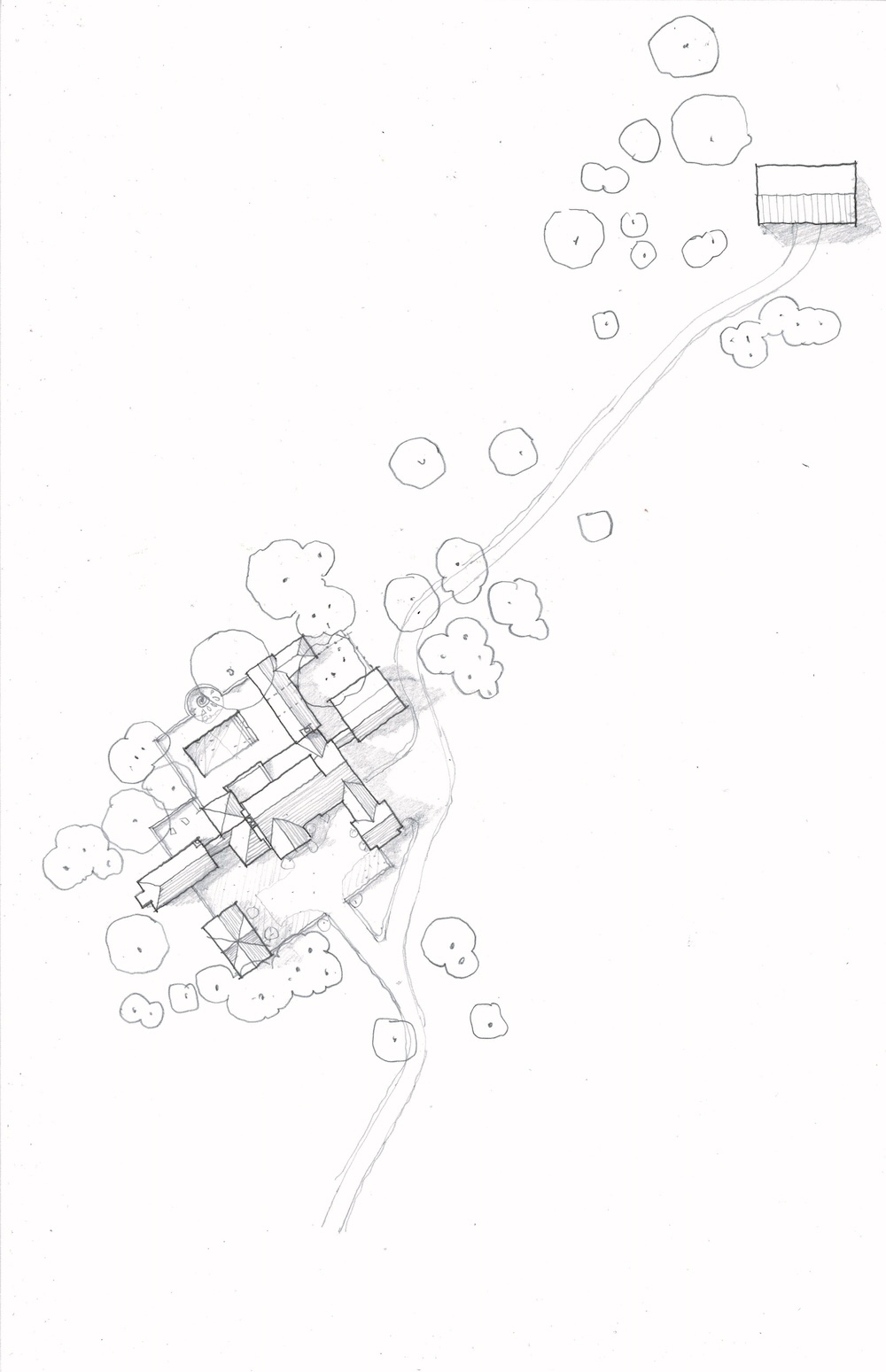
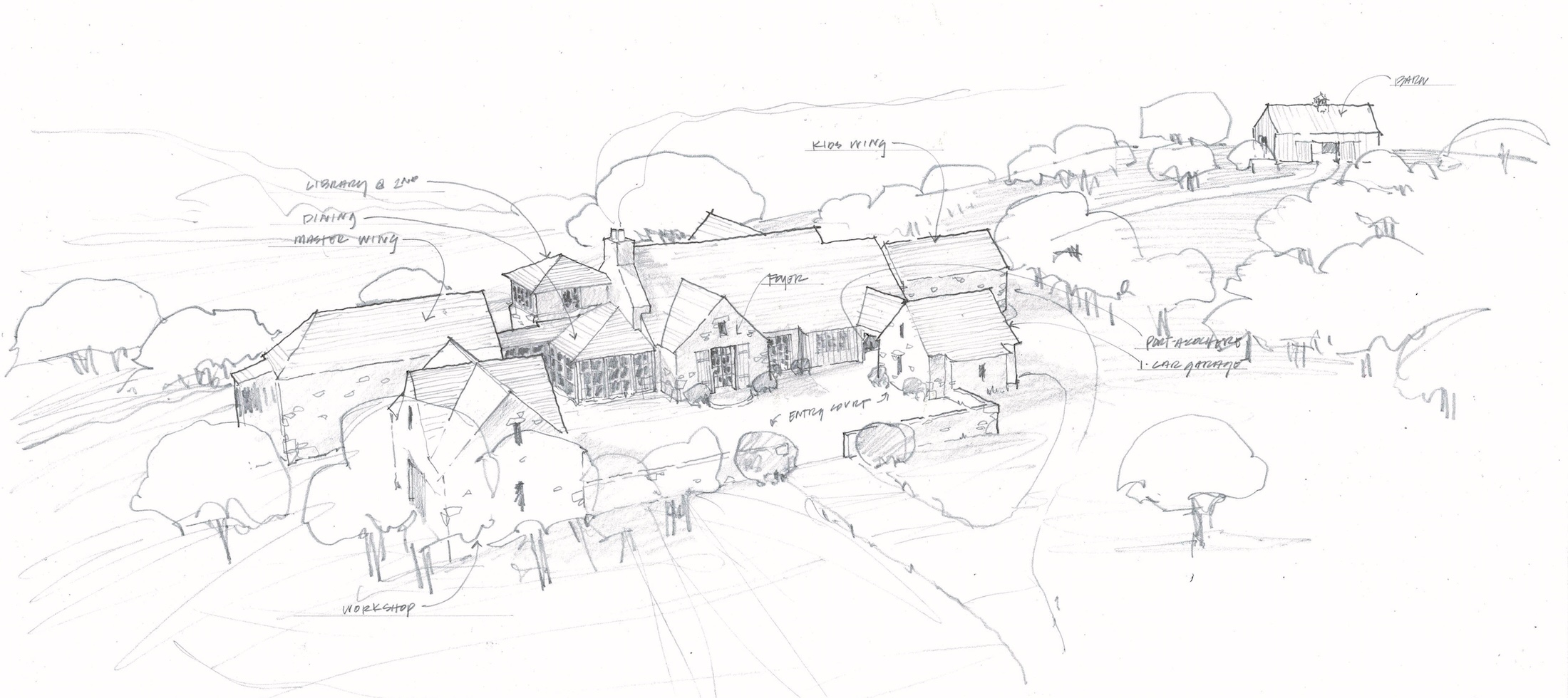
Rather than clustering structures for convenience alone, buildings are placed to respect topography, preserve viewsheds, and maintain a sense of openness. Guest houses, barns, and primary residences are positioned to feel connected — yet never crowded — allowing the ranch to breathe.
Planning for Change Over Time
A well-designed ranch evolves. The master plan anticipates future needs — additional buildings, expanded trails, shifting uses — without compromising the original vision. Phased growth ensures the property remains cohesive as it changes, rather than feeling pieced together over time.
Sustainability in Practice
Native grasses, live oaks, and wildlife corridors are preserved wherever possible. Local stone and timber reduce environmental impact and keep the architecture connected to its setting. The plan anticipates growth in phases, ensuring the ranch can evolve while staying true to its origins.
“Enduring design comes from listening first, letting the land reveal how it wants to be lived in.”
Why It Matters
A ranch is more than land — it’s a place you move through, live on, and return to over time. Good master planning makes that experience feel natural from the start. When buildings, roads, and landscapes respond to the land itself, the ranch works better, lasts longer, and feels easier to live in.
This episode shows how thoughtful planning prevents common mistakes — poorly placed roads, awkward building sites, drainage issues, and disconnected structures. For clients, that means fewer compromises later and a property that grows gracefully. When a ranch is planned with care, it becomes something lasting: a place shaped by the land, not forced onto it.


ABOUT THE TEAM
Led by Managing Principal Dale Dibello and Design Principal Joey Kammerer, the studio brings decades of experience crafting homes and landscapes that feel timeless and rooted. Dale’s early years restoring historic Texas architecture and Joey’s fine-arts background combine to create a practice where observation, artistry, and practicality meet. Their work is known for clarity of vision and a deep respect for the land qualities that resonate powerfully in this ranch project.
Get our Design Guide and see how purpose, place, and partnership come together to create architecture that’s grounded, responsive, and built to last.